

Yes, I Really Did Let AI Help Me Write This
Table of Contents
AI was used to generate this blog post. I didn’t do any of this research — AI did it. I peppered in my thoughts. I added my take on things. I carefully crafted the prompts that generated the answers. My Human Intelligence came up with the questions I wanted to ask, the angle I wanted to frame it, the story I wanted to tell. Does this take away from the topic, knowing that AI contributed? Is there any way to look at this as somebody using a calculator to do their math rather than doing it in their head? I truly wonder what it means to use AI in the work we do. Is it OK to refer to it as a tool, as an augmentation of our minds? I kind of see no way around this. What do you think?
What Does It Mean to Work With AI When You Write?
AI-assisted writing is the practice of using artificial intelligence tools to support research, drafting, editing, or idea generation — while a human writer retains control over purpose, voice, and editorial decisions. It’s not ghostwriting by a machine. It’s a collaboration where the human supplies the meaning and the AI handles the mechanics.
This question — the one you’re reading right from the start — is the question so many people are wrestling with right now. When we use AI to assist our writing, research, and idea generation, what does that mean for authorship? Does it dilute the work? Or does it simply change the workflow?
When you say:
- I came up with the questions
- I shaped the prompts
- I had a specific angle and story in mind
…you’re already defining something essential: AI didn’t create the purpose of this post — you did.
That distinction sits at the heart of modern authorship.
AI can support the how. Only humans can supply the why.
You chose the direction. You set the frame. You decided what mattered. The writing that follows — even if built with AI — is still fundamentally your work.
Is AI-Assisted Writing Really Any Different From Using Other Tools?
My intro contains a question that’s both honest and (I think) profound:
“Is there any way to look at this as somebody using a calculator to do their math rather than doing it in their head?”
The answer is yes — and that comparison is stronger than people realize.
When someone uses a calculator, we don’t accuse them of cheating. We don’t say the calculator “did the math” in a meaningful sense. The human still sets the problem, interprets the output, and decides what the numbers mean.
AI behaves similarly:
- You decide the questions.
- You decide the values guiding the work.
- You decide the angle and the story.
- You evaluate what the AI returns.
- You choose what stays and what gets deleted.
The tool accelerates the mechanics. The human shapes the meaning. That is authorship.
How Does AI Actually Fit Into the Writing Process?
Instead of treating AI as a separate thinker with its own stance, it’s more useful to see it as a pattern engine — something that generates possibilities, helps you explore alternate angles, and gives you more ways to express what you want to say.
Here are a few grounded observations about how AI actually operates during writing:
-
AI doesn’t have opinions or intentions — it responds to direction. The meaning comes from the writer. The model is reactive, not self-driven. It only expands on the path you set.
-
AI accelerates the scaffolding of writing, not the soul of writing. It can draft, summarize, reorganize, or expand. But it can not tell you what matters or why it matters. That part is entirely human.
-
Human judgment remains the critical ingredient. You decide what’s accurate, what aligns with your voice, what fits your purpose, and what resonates with your readers. Without this layer, AI output is just raw material.
-
AI amplifies a writer’s reach rather than replacing their craft. It gives you more ways to explore your thoughts, not fewer. It reduces friction and increases clarity, but it can not create meaning on its own.
-
The writer’s lived experience still shapes everything. Your personal story, values, worldview, and emotional intelligence can not be automated — and no model can replace those ingredients.
What Other People Think About Using AI in Writing
There’s a surprisingly wide range of thought here, and this conversation lands right in the middle of the broader debate.
Many people believe AI is simply a tool. These are developers, business owners, educators, and creators who see AI as an accelerator, a brainstorming partner, a clarity tool, a research assistant, and a revision aid. For this group, the human remains firmly in control. AI handles the scaffolding; the human provides the purpose and the message. They compare AI usage to calculators, cameras, spreadsheets, or Google Search.
Others worry AI blurs the line of authorship. Their concerns include loss of originality, overreliance on automation, misinformation, skill erosion, and ethical ambiguity. These worries are valid — especially when AI is used without intention or guardrails.
Most people fall into an “it depends” stance. This group asks: How is AI being used? What role is the human playing? Is the writer still shaping the meaning? Is the writer transparent about the process? They care about the relationship between human and tool — not the tool itself.
My intro already contains the answer most thoughtful creators come to: it’s still your work because you’re the one steering the ship.
Familiar Tools That Work the Same Way
The calculator analogy is one of the strongest ways to explain this. But there are many tools throughout history that extend human ability without replacing human reasoning:
- The Calculator — handles mechanical steps so humans can focus on the logic, the problem, and the interpretation.
- Spell-Check and Grammar Tools — improve clarity, but they don’t create ideas or arguments.
- Google Search — retrieves information, but humans interpret relevance and meaning.
- Excel and Spreadsheets — compute and visualize, but humans decide what questions to ask and what the results imply.
- A Camera — captures images, but the photographer chooses the story.
- GPS Navigation — suggests a route, but the driver chooses the destination.
- Music Production Software — enables expression, but the musician defines the melody and emotion.
- Power Tools — increase efficiency, but the carpenter designs and directs the outcome.
AI belongs in this category: a tool that expands capacity, not something that replaces human meaning-making.
Why Does AI Transparency in Writing Matter?
My intro is doing something important: it embodies AI transparency — the practice of openly disclosing how artificial intelligence contributed to a piece of work.
By openly stating that AI contributed, you’re building trust, modeling responsible usage, acknowledging human-AI co-creation, honoring your audience, and giving readers a window into your thinking.
Transparency isn’t required — but it is respected. And it reinforces exactly what we stand for at Violet Beacon: human-first technology. As a responsible AI consultancy, we believe disclosure doesn’t diminish the work — it demonstrates the kind of intentionality that builds lasting trust.
What Does AI Mean for the Future of Writing?
Writing isn’t disappearing. Authorship isn’t dissolving. Creativity isn’t evaporating.
What’s happening is an evolution of the writing process itself. Writers are shifting from typing to shaping, from drafting from scratch to directing, from spending energy on mechanics to spending energy on meaning.
This doesn’t lessen human creativity — it actually expands it.
AI takes away friction, not authorship. It removes barriers, not imagination. It clears space for thinking, reflection, and intent.
A Final Thought
My intro asks: “Is it OK to refer to AI as a tool, as an augmentation of our minds?”
Yes. Not only is it OK, it’s accurate.
Humanity has always created tools to extend our abilities — telescopes for vision, calculators for logic, cameras for memory, computers for organization, the internet for connection.
AI simply extends cognitive reach.
And when you use it with transparency and intentionality — the way I’ve done here — the writing remains unmistakably yours.
AI helped shape the scaffolding. You supplied the purpose. You supplied the values. You supplied the meaning.
That is authorship.
How AI Was Used in This Post
AI assisted with research, drafting, and structuring this article. The original concept, key questions, editorial direction, and final voice were shaped by Kate Waldhauser. The intro was written entirely by the author. All content was reviewed and approved before publishing.
Frequently Asked Questions
No. Using AI for writing is comparable to using a calculator for math or a camera for storytelling. The human still decides the questions, the angle, the values, and what matters. AI accelerates the mechanics while the writer shapes the meaning. What matters is transparency about the process.
State clearly what role AI played -- research, drafting, editing, or idea generation. Describe what the human contributed, such as direction, review, and final decisions. This builds trust with readers and models responsible AI use for others in your industry.
Not when the human remains in control. AI can draft, summarize, and reorganize, but it can not tell you what matters or why. Your lived experience, values, and editorial judgment are what make writing original. AI removes friction from the process -- it doesn't replace imagination.
AI writing for you means copying and pasting output without review or direction. AI writing with you means you set the purpose, craft the prompts, evaluate the output, and decide what stays. The distinction is human oversight and intentionality -- the same principles behind responsible AI use in any context.
Yes. Transparency about AI use builds trust with your audience and demonstrates responsible practices. It also sets a healthy standard for your industry. Disclosure doesn't diminish the work -- it shows confidence in the human judgment behind it.
Wondering where AI fits in your workflow?
Our AI Readiness Guide helps you figure out where to start -- with a focus on the human elements, not just the technology.
Get the AI Readiness GuideExplore Related Services
Related Posts
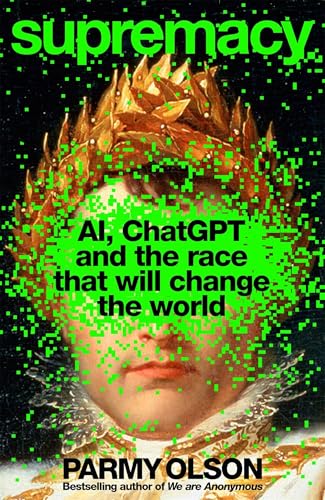
AI Book Review: Supremacy — AI, ChatGPT, and the Race that Will Change the World
A review of Parmy Olson's book on the global AI race, OpenAI vs. DeepMind, and the impact of AI on business, society, and the future of work.
Read article →
If AI Can Teach Us Anything, Why Do We Still Follow People?
Even in an AI-powered world, we still seek out real teachers, mentors, and in-person gatherings. This article explores why human connection remains essential despite AI advancement.
Read article →